
Sports
Why did 20% of the NBA participate in a complicated six-team trade involving 10 role players?
Sam Quinn · July 8, 2026
Source: CBS Sports Headlines · Read on source site
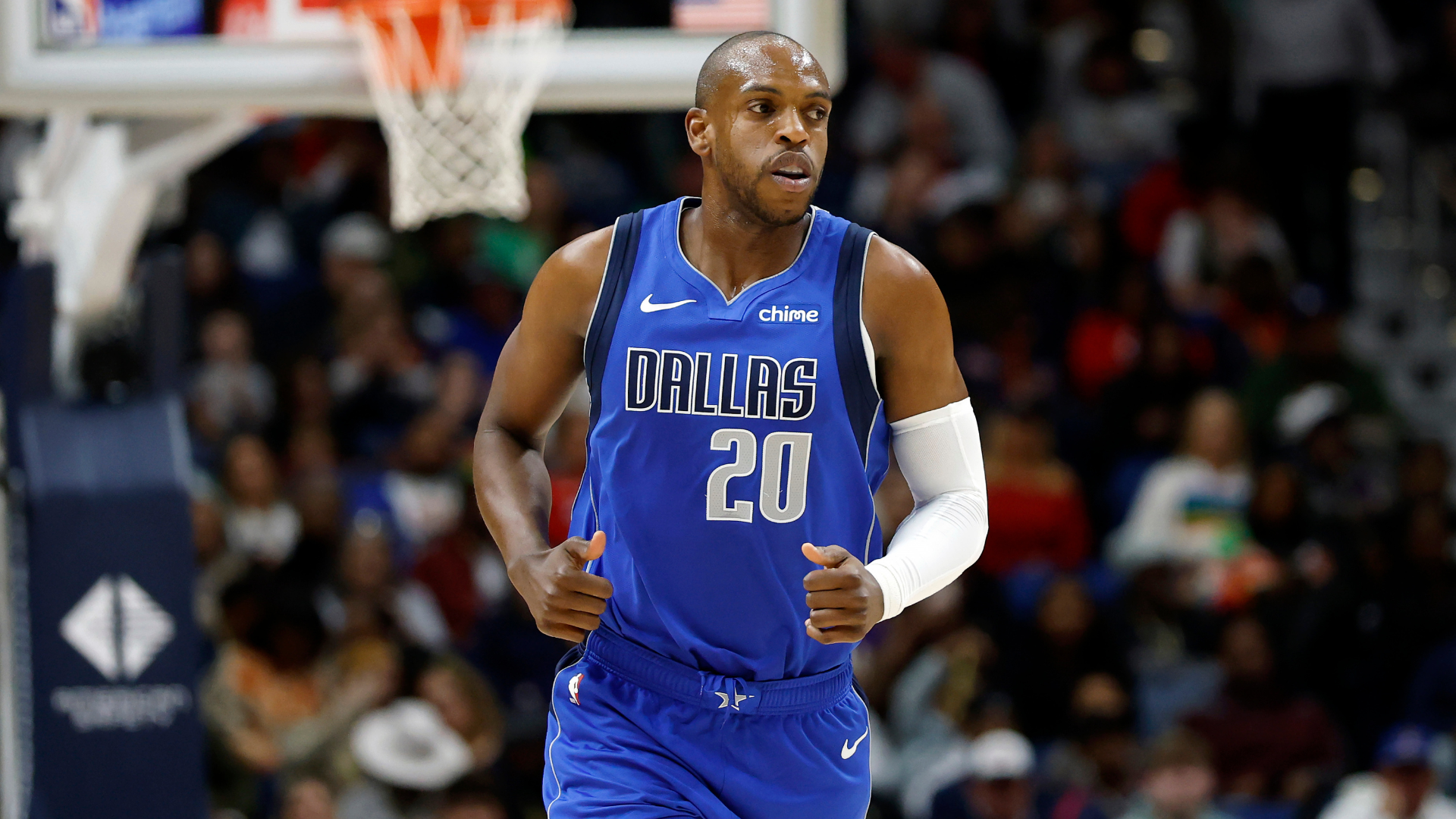
Late Tuesday night, reports came in that Khris Middleton would be returning to the Washington Wizards on a three-year, $17.6 million deal. Pretty unremarkable news. A player and team that had spent a year or so together decided they liked the experience enough to reunite. Seems straightforward enough. And then the follow-up: the sign-and-trade would be folded into a six-team deal featuring 10 total players and one-fifth of the NBA's teams.
>Wait... what? It feels as though we've skipped a few steps here. How does a Middleton sign-and-trade turn into a six-team deal? Well, such maneuvers are actually pretty common this time of year. Teams frequently combine several agreed-upon transactions into a single, massive multi-team trade purely for procedural purposes as it relates to the salary cap.
>First things first, who's involved in this one aside from Middleton? Below are the 10 players involved in the deal, where they started and where they're going:
>If you've been following the NBA's transaction cycle, you'll know that several of these moves were all reported independently. The Stewart-to-Memphis trade came during the second round of the NBA Draft. The Collins and Aldama moves were initially reported as individual transactions. But these agreements all occurred before or during the July moratorium, when transactions cannot officially be made. That leaves teams time to figure out how to structure their transactions in the most advantageous ways possible.
>So, why were all of these moves reconfigured into a six-team deal? Because doing so offered granular cap benefits to everyone involved. With that said, let's go through each team in the deal and explain why it was structured this way:
>The Wizards could have simply signed Middleton with their mid-level exception. However, they came into July 8 with a $13.4 million trade exception that expired Wednesday. As trade exceptions include a $250,000 buffer, it conveniently allowed the Wizards to absorb both Deandre Ayton (at $8.1 million) in a separate deal and then Middleton (at $5.6 million) on top of him with what remained of it. So, by structuring this deal as a sign-and-trade, they preserve their full mid-level exception for future use.
>Having your mid-level exception available means little if you can't actually use it. Had the Wizards not moved off any salary, they would have been looking at only around $5 million in space below the luxury tax line with no open roster spots. So they looped in Memphis to take in Russell for some second-round picks. Now the Wizards have an open mid-level exception and around $11 million in room below the tax line to add with.
>The Grizzlies have a $28 million trade exception leftover from sending Jaren Jackson Jr. to the Jazz. However, as the Grizzlies are operating below the first apron this season, they have access to the expanded $9.1 million matching salary buffer for trades that came in the 2023 CBA. That meant that they could use Aldama's $17 million to match Stewart's $15 million, Russell's $6 million and Johnson's $3.2 million, preserving the Jackson exception for something bigger if they need it. Getting picks to take on Russell is just a nice bonus.
>The Bucks are in the same boat as the Grizzlies. They can use Prince and Harris to match on LeVert, preserving their mid-level exception. Like the Grizzlies, they got picks to take on LeVert, but LeVert is also a useful NBA player who they could potentially flip down the line.
>The Pistons are paying Collins above the mid-level exception. They had the capacity to create cap space in order to do that. However, because the salary gap between Collins and LeVert is less than $9.1 million, the Pistons can instead simply use LeVert to match Collins' salary. This, in turn, allows them to generate two new trade exceptions: one for $15 million by sending Stewart to Memphis and the other for $5.2 million by sending Sasser to Dallas.
>By staying over the cap, the Pistons could preserve their Bird Rights on Kevin Huerter, whom they previously agreed to re-sign, and retain their own mid-level exception, which they're using to absorb Isaiah Joe from the Oklahoma City Thunder. The only catch is that all of this hard caps them at the first apron, a potentially tricky situation to be in with Jalen Duren sitting in restricted free agency. However, non-Pistons teams can only offer him around $41 million next season, while the Pistons have almost $56 million in room beneath the first apron to operate with. With that in mind, doing all of this doesn't put them in any danger of losing him. If anything, it makes paying him more palatable as they've trimmed some extra salary off their books.
>For the Clippers, this equation is simple. When possible, teams losing free agents almost always prefer to structure those losses as sign-and-trades because doing so creates a trade exception at the player in question's new salary. The alternative for the Clippers was losing Collins for nothing. Instead, they not only get that trade exception, but a second-round pick from Detroit.
>By signing and trading Middleton out, the Mavericks can combine him with Johnson to match the money on the Aldama acquisition. That allows them to preserve both their mid-level exception and the $20.3 million trade exception they created by dealing Anthony Davis in February. Sasser will come into their bi-annual exception.
>Could all of these players have wound up with all of their new teams without the use of a six-team mega trade? The answer is yes. But NBA teams employ cap strategists for precisely this reason. If there is any marginal advantage to be found in turning a two-team trade into a six-team trade, they are usually going to find it.
>Even if that advantage is as small as preserving one trade exception or creating another, every tiny edge counts in a cap environment this restrictive.
>That's why, every July at around this time, you hear about a series of minor moves getting lumped into a handful of bigger ones.