Sports
MLB trends: A good problem for the Mariners, a bad one for the Phillies and how Chase Burns defies tradition
Mike Axisa · June 3, 2026
Source: CBS Sports Headlines · Read on source site
The calendar has flipped to June and the All-Star break is only a month away. The trade deadline is exactly two months away. We're into the meat of the baseball season now, when things become real and we find out which teams are really contenders and which teams are just pretenders that had a hot start. The season is fully coming into focus.
>With that in mind, here are three trends worth knowing about as we enter the season's third month.
>After a sluggish open to 2026, the Mariners have ascended to first place in the AL West, and they have baseball's sixth-best record since their 8-13 start. Josh Naylor and Julio Rodríguez have gotten hot and top prospect Colt Emerson has given the offense a nice shot in the arm since being called up. The Mariners are beginning to look like the team we thought they would be.
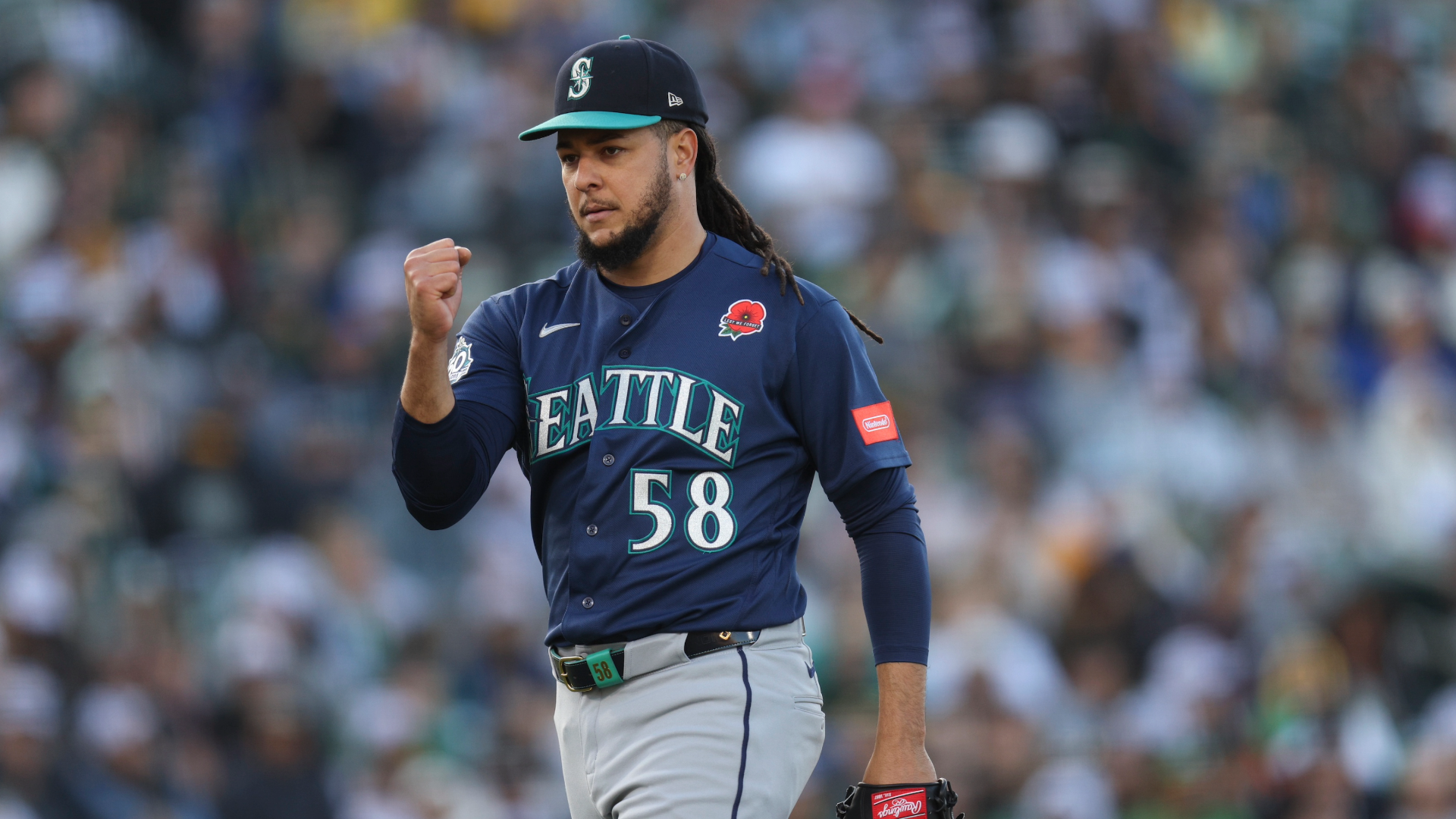
>Within the last few weeks, Seattle has come into a problem -- "problem" -- that most teams would love to have: they have too many good starting pitchers. Emerson Hancock's emergence (2.80 ERA with strong under-the-hood numbers) gives the Mariners six quality starters alongside Luis Castillo, Logan Gilbert, George Kirby, Bryce Miller, and Bryan Woo. They're six deep in starters.
>Miller's spring training oblique injury opened the door for Hancock to grab a rotation spot. When Miller returned on May 13, the Mariners opted not to send someone to the minors or use a six-man rotation. They instead went with a piggyback system. Castillo, who pitched to a 6.57 ERA in his first eight starts, and Miller have worked in tandem the last three times through the rotation.
>On the field, it has worked wonderfully. The Castillo/Miller piggyback has pitched 27 of 28 possible innings in the three games it has been used, the Mariners have won two of three, and the duo has a combined 1.67 ERA. Here's a recap of their appearances:
>May 31 vs. Diamondbacks (3-2 win in 10 innings)
>May 19 was Castillo's 253rd career game and his first ever relief appearance. He and Miller covered all 10 innings in that May 31 walk-off win over the D-backs, during which they each threw exactly 71 pitches. The Castillo/Miller tandem has pitched well, they've given the bullpen a night off every fifth day, and both guys are still stretched out. It's worked as well as the Mariners could have hoped.
>"If you don't have experience with it, it does make you a little nervous," Castillo said about pitching with the automatic runner at second base in the tenth inning on May 31 (via MLB.com). "But the important thing for me was going out there and just battling against every battle I faced. The pitching coach told me, 'This is your game, go finish it.'"
>The on-field results have been terrific, though neither Castillo nor Miller was thrilled about piggybacking. After exiting that May 25 game, Castillo was seen slamming his glove in the dugout and having a lengthy conversation with manager Dan Wilson. Wilson and POBO Jerry Dipoto met with Castillo and Miller to smooth things over and explain the situation.
>"This is not an easy science, the piggyback thing," Wilson said after that May 25 game (via MLB.com). "And I think, always, you're kind of weighing a lot of different things. And a tough decision in terms of (pulling Castillo), and I think he just continues to prove to be an incredibly selfless player."
>Players are competitors and pitchers don't like to come out of games. Castillo and Miller are human beings and are allowed to be less than thrilled with the piggyback situation. Ultimately, though, both put the team first and did what was asked of them: they went out and performed well. On the field, the Castillo/Miller piggyback really couldn't have worked out much better.
>Up next is a six-man rotation. Starting Friday, the Mariners will play 10 games in 10 days and 16 games in 17 days, so they're going to break up the piggyback and use Castillo and Miller as traditional starters. The six-man rotation will give every starter extra rest in June, and keep Castillo and Miller fully stretched out. Given how effective it was, the piggyback could return later this season.
>"You've got to tip your cap to them," Wilson said this past weekend (via MLB.com). "Their willingness to put the team first in these situations, not an easy situation to come into. Both of these guys deserve a huge pat on the back for the way they've approached it and been selfless in a lot of ways."
>For all the early offseason talk about the Phillies wanting to shake up their offensive core, they didn't change their lineup all that much. Nick Castellanos was jettisoned and replaced by Adolis García, who is essentially Castellanos with better defense, and top prospect Justin Crawford was given the center field job. Otherwise, it's the same offensive core as the last few years.
>To say the outfield shakeup has not provided the desired results would be an understatement. Philadelphia's outfield, in fact, has been a disaster. One of the worst in baseball. Here are the outfield's numbers entering Tuesday's action:
>That .236/.291/.357 slash line comes in at close to 700 plate appearances, and, incredibly, Brandon Marsh and his .317/.350/.471 line account for more than 200 of those plate appearances. Philadelphia's other outfielders (mostly Crawford and García, but also Otto Kemp, Felix Reyes, Edmundo Sosa, and others) are hitting .201/.267/.310 in roughly 500 plate appearances. Yeesh.
>Defensively, there has been no improvement, at least according to the numbers. Philadelphia's outfielders entered June with minus-8 defensive runs saved and minus-5 outs above average. Last year, it was minus-16 DRS and minus-10 OAA in a full season, so, on a rate basis, the outfield has been worse defensively in 2026. Here's another way we can show that:
>BABIP is batting average on balls in play and does not include home runs because, well, they're not in play. The defense doesn't have a chance to turn them into outs. In 2024 and 2025, the Phillies turned fly balls into outs at a very slightly worse-than-league-average rate. Below average but not awful. This year, they're baseball's worst team at turning fly balls into outs.
>Other than Marsh, the Phillies aren't getting any offense from their outfield, and the defense hasn't been nearly good enough to compensate. It's the worst outfield in baseball among teams with designs on reaching the postseason, if not the worst outfield in baseball period. The front office will have to do something about it at the trade deadline. (I love Taylor Ward as a fit.)
>The Phillies have recovered from their 9-19 start to get back to .500 despite their terrible outfield. They still have ground to make up to get into postseason position and they have plenty of time to do it, but it's hard to see them doing it while getting this little from the outfield. This is a win-now roster. I would be surprised if the Phillies don't add an outfielder(s) between now and the deadline.
>The Royals caught a break Monday and took full advantage. Reds righty Chase Burns was scratched from his scheduled start due to an illness, and Kansas City jumped on fill-in starter (an opener, really) Lyon Richardson for four runs in the first inning. Lane Thomas hit a grand slam six batters into the game and the Royals cruised to a stress-free win the rest of the way.
>Burns is expected to start Wednesday's series finale, so it won't be a long absence, and that's good news for the Reds. With Hunter Greene working his way back from elbow surgery, Burns has emerged as the team's best starting pitcher. The No. 2 overall pick in the 2024 Draft entered play Tuesday as a top 15-ish starter in baseball. Here are his ranks among qualified pitchers:
>Expected ERA, or xERA, incorporates contact quality allowed (exit velocity, launch angle, etc.). It tells us that, in addition to running one of the highest strikeout rates in baseball, Burns also limits hard contact well, particularly in the air. xERA puts Burns in the same neighborhood as Cristopher Sánchez (2.90) and Bryan Woo (2.90). He's been that good.
>"I think he's special now, but what he grows into will be what he grows into," Reds manager Terry Francona said recently (via MLB.com). "I don't need to sit here and put a number on him or something. That's not fair. As long as he does the best he can to be as good as he can, we'll do what we need to do."
>What makes Burns unique is that he is essentially a two-pitch pitcher. He's thrown his upper-90s four-seam fastball 57% of the time this season, and his hard low-90s slider 36% of the time. The fastball and slider account for 93% of his total pitches. Burns uses a low-90s changeup as his third pitch and, obviously, he doesn't throw it all that often.
>It is uncommon to see a two-pitch starter, especially these days. It seems like every pitcher (even relievers) has a suite of offerings now. Multiple fastballs (four-seamer and sinker), breaking balls that bend every which way, a changeup, etc. How anyone gets a hit these days, I'll never understand. Pitchers are so nasty and their usage is optimized to the nth degree.
>Including 2026, 271 individual pitchers threw enough innings to qualify for the ERA title since 2022. Only seven of those 271 pitchers threw two pitches a combined 90% of the time. Here's the list:
>Only 126 of those 271 pitchers threw two pitches even 66% of the time, so not even half use their two best pitches two-thirds of the time. Twenty-four of those 271 pitchers threw their top two pitches less than 50% of the time, including some really good pitchers (Sandy Alcantara, Max Fried, Sonny Gray, Ranger Suárez). Big arsenals are all the rage nowadays.
>As good as he's been, Burns is really only scratching the surface of his talent. He's dominating with two pitches and there are paths to getting even better, including throwing more changeups and perhaps incorporating a sinker. It's easier said than done, of course, but the Reds are pretty good at developing starters. Burns looks like baseball's next young ace.